
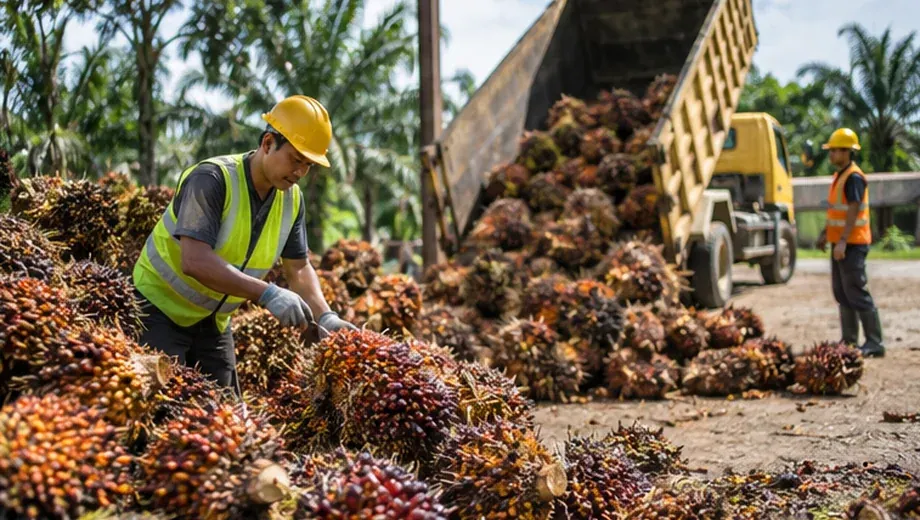
At a palm oil collection ramp, the day moves quickly: trucks arrive, fresh fruit bunches (FFB) are weighed and checked, and loads leave for the mill. The biggest operational problem is often not a single error. It is information scattered across weigh tickets, quality notes, dispatch messages and mill statements. Bringing those records together makes each load easier to follow.
Disconnected records create repeated work
When purchases sit in a notebook, dispatch instructions in a chat and mill results in a separate spreadsheet, staff spend time matching information rather than resolving exceptions. Differences in weights or quality deductions may only become visible at the end of the week.
A more reliable workflow starts with consistent supplier references, dates, vehicle details, transaction weights and dispatch identifiers. They form the link between what entered the ramp and what the mill eventually reported.
Connect receipt, quality, dispatch and reconciliation
At intake, capture the supplier, quantity and relevant quality observations. Before a load leaves, complete the dispatch record and supporting references. When the mill statement arrives, compare received weight, deductions and value with the originating transactions.
RapiRamp brings together FFB transaction recording, fruit-quality checks, dispatch, mill results and reconciliation workflows. Rather than starting a fresh manual reconciliation for every load, teams can work from connected operational records.
Make the workflow useful in everyday operations
Assign clear owners for intake, checking, dispatch and mill-result entry. Review incomplete transactions each day and use consistent references to reduce confusion. When the field connection is unstable, verify synchronization status before treating a local entry as fully submitted.
The point is not to digitize every form for its own sake. It is to answer practical questions: who supplied the FFB, what was received, when did it leave, what did the mill accept, and what explains the difference?
Start with one ramp and expand with confidence
A phased rollout is often more manageable. Begin with intake, dispatch and mill results; then introduce quality control, payment monitoring and reporting as the team develops consistent habits. Keep sample transactions separate from actual business records.
RapiRamp supports this connected workflow for palm oil collection businesses in Indonesia. New ramps can start with a 21-day free trial. After the trial, operational access closes and owners can request an available data export; ongoing use requires an administrator-assisted plan upgrade.